
Hospitality
The People Who Make a Place Feel Safe
What travel can teach us about the spaces we create for one another.
22 July 2026·5 min read
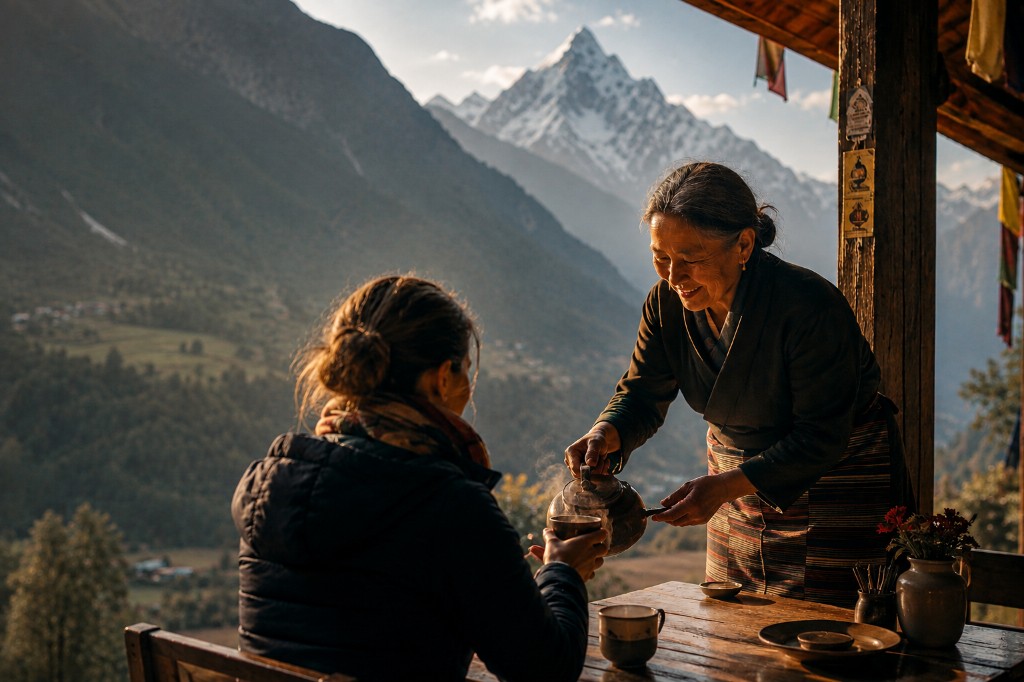
There are places we remember because they were beautiful.
And there are places we remember because of how we felt there.
A mountain hut where someone noticed we were cold before we said anything.
A family table where there was no need to explain ourselves.
A guide who sensed that the group needed to slow down.
A hotel where the person welcoming us somehow made an unfamiliar place feel easy.
Often, the difference is a human being.
Someone was paying attention.
The invisible work of welcoming
We tend to think of hospitality as something tangible.
A comfortable room. Good food. Clear directions. Things running smoothly.
But beneath all of that is another kind of hospitality.
The ability to make someone feel that they belong.
It can be as simple as remembering a name. Leaving space in a conversation. Noticing who hasn’t spoken. Understanding when someone needs help without making them feel helpless.
None of these things are particularly dramatic.
Perhaps that’s why we rarely talk about them.
Yet they shape our experience of a place.
Travel makes this easier to see
When we travel, many of our usual reference points disappear.
We don’t necessarily know the language, the customs or what is expected of us. We may not know where we’re going. Sometimes, quite literally.
For a while, we depend on other people.
And that makes something visible that is easy to overlook in everyday life:
How much our experience depends on the spaces other people create around us.
A good guide doesn’t only know the trail.
A good host doesn’t only provide a room.
A good facilitator doesn’t only run an agenda.
They are constantly reading what is happening between people.
Who feels comfortable.
Who is uncertain.
When to speak.
When to wait.
When to step forward.
And when to get out of the way.
Perhaps this isn’t really about travel
The more we listen to people who do this work, the harder it becomes to see these qualities as belonging to hospitality alone.
A teacher welcoming a child into a classroom.
A manager opening a difficult meeting.
A researcher interviewing someone whose experience differs profoundly from their own.
A CEO creating conditions in which disagreement is genuinely possible.
A friend sitting beside someone who doesn’t yet know what to say.
Different worlds.
Much of the same work.
Creating a space in which another human being can arrive.
Not just physically.
But as themselves.
What if we paid more attention to the hosts?
We often celebrate the people standing at the centre.
The speaker.
The leader.
The expert.
The person with the answer.
Perhaps we should pay more attention to the people quietly shaping the conditions around them.
The ones asking the question that changes the conversation.
The ones noticing who has been left outside the circle.
The ones making it safe enough for someone to say what they actually think.
The ones who know that sometimes the most useful thing they can do is listen.
Their work can be almost invisible.
Its consequences aren’t.
Because whether we’re crossing a mountain, entering a meeting room or sitting around a kitchen table, something remarkably similar is happening.
We are constantly creating spaces for one another.
The question is what kind.