
Presence
The Difference Between Visiting a Place and Meeting It
On leaving room for what we don't already know – and why the best journeys leave us with fewer conclusions.
5 August 2026·6 min read
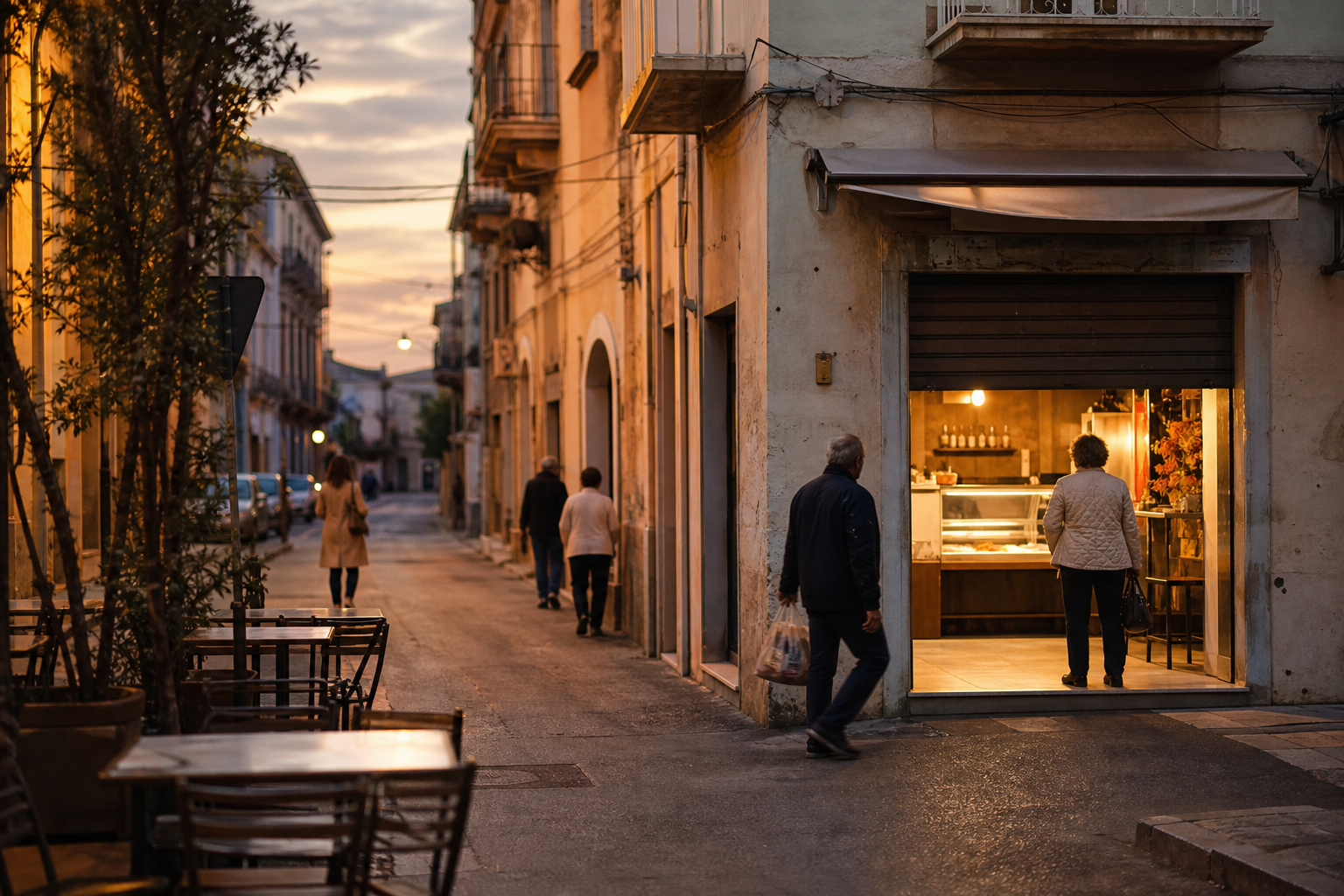
There is a point on some journeys when a place stops feeling new.
Not familiar, exactly. We still don’t know our way around particularly well. We couldn’t tell you which bus to take or where people go on a Tuesday evening. But something changes.
We stop looking at everything.
On the first morning, almost anything can seem interesting. The buildings. The signs. The way breakfast is served. We notice differences because difference is what we have come to see.
A few days later, we walk past some of those same things without noticing them at all. And strangely, that can be when we begin to notice the place.
Not the things we were told to look at, but the life happening around them. The café that is empty every afternoon and inexplicably full at six. The schoolchildren taking over a square that looked rather grand when we photographed it the day before. The same man opening his shop in the morning. The sudden disappearance of everyone when it starts to rain.
None of it is particularly important. But perhaps that is part of the difference. We are no longer collecting evidence that we have arrived somewhere interesting. We are simply paying attention.
Travelling as recognition
Travel makes collecting very easy. Places come with names, lists and recommendations. There are things to see, things to do, things not to miss. Even before we arrive, we often know what we are supposed to find remarkable.
So we go and find it remarkable.
Usually, it deserves to be. There is no shame in standing in front of something famous and being impressed. Famous places tend to be famous for a reason.
But sometimes our expectations become so detailed that travelling begins to resemble recognition. We see the view we have already seen in photographs, order the dish we have already read about, walk through the neighbourhood someone described as charming and are pleased to discover that it is, indeed, charming.
We came to discover somewhere new, yet much of the time we are confirming what we already know.
Leaving room for what we don’t know
Meeting a place seems to involve leaving a little more room for what we don’t.
This isn’t about searching for the supposedly “real” place hidden behind the tourist one. That idea has always been slightly strange. A busy square full of visitors is real. So is a resort, an airport, a souvenir shop and a restaurant with a translated menu. There isn’t another country concealed somewhere behind them, waiting for more discerning travellers to discover it.
There is simply more going on than we can see at first.
Some of it becomes visible because we stay longer, or because somebody points out something we would never have noticed ourselves. Sometimes we take the wrong street and find ourselves in a completely ordinary neighbourhood where nothing much happens. Sometimes we spend an hour waiting for a bus. These aren’t necessarily the moments we will remember, and they certainly don’t need to become meaningful just because they weren’t planned. But they gradually add something to our sense of where we are.
When the place gives us little
And sometimes the place gives us very little at all.
We may arrive at the market after everyone has packed up. The person beside us on the train may prefer to look at their phone. The village we imagined as charming might turn out to be mostly closed on Mondays. The weather can ruin the view.
None of this is a failure of the journey. A place does not exist to produce an experience for us, even though travel can sometimes make it feel that way.
Questions we couldn’t prepare
Once we stop expecting it to, curiosity becomes less purposeful. Instead of always asking where we should go next, we begin to wonder about whatever happens to be in front of us. Why is everyone walking in that direction? What are they eating? Why are the shops closing now? What is that game those children are playing?
Often the answers are completely ordinary. Occasionally they lead somewhere unexpected. Either way, they are questions we couldn’t have prepared before arriving.
One person’s story
People can change our understanding of a place in much the same way. Someone mentions the factory that used to employ half the town, and the empty buildings we had barely registered suddenly mean something different. A guide points out where she went to school. A waiter explains why the restaurant is unusually quiet. Someone tells us the mountain we have been photographing is not simply a beautiful backdrop but part of a much larger story we know nothing about.
None of these encounters gives us privileged access to the place. One person’s story is still only one person’s story, and most people we pass have no particular reason to share theirs with us. They are getting to work, meeting friends, collecting their children, buying groceries. Their lives continue quite independently of our interest in them.
There is something useful in remembering that, especially because travel makes it surprisingly easy to turn limited encounters into sweeping conclusions. We spend a week somewhere and come home saying the city is friendly, the culture is relaxed, the people are generous. Perhaps they were, in our experience. But another visitor could arrive the following week and encounter something entirely different.
Fewer conclusions
The places that stay interesting are often the ones that become harder, rather than easier, to describe.
We thought we understood something and then saw its opposite. Someone challenged an assumption we hadn’t realised we were carrying. A neighbourhood that seemed one way in the morning felt completely different at night. We leave with more impressions than we arrived with, but perhaps fewer conclusions.
And maybe that is closer to what it means to meet a place.
The courtesy we owe a place
When we meet a person, after all, we don’t expect to understand them completely. We might spend an evening together and come away with only fragments: something they found funny, a story they told, a subject they avoided, a way of seeing something we hadn’t considered before. We wouldn’t mistake any of this for the whole person.
Perhaps places deserve the same courtesy.
We don’t have to decode them or find their essence. We don’t even have to come away transformed.
We were there for a while, and we paid enough attention for the place to become more complicated than the idea of it we brought with us.
That seems like a pretty good meeting.