
Memory
Why Do Some Journeys Stay With Us?
On the unevenness of travel memory – and why some trips become part of who we are.
1 August 2026·6 min read
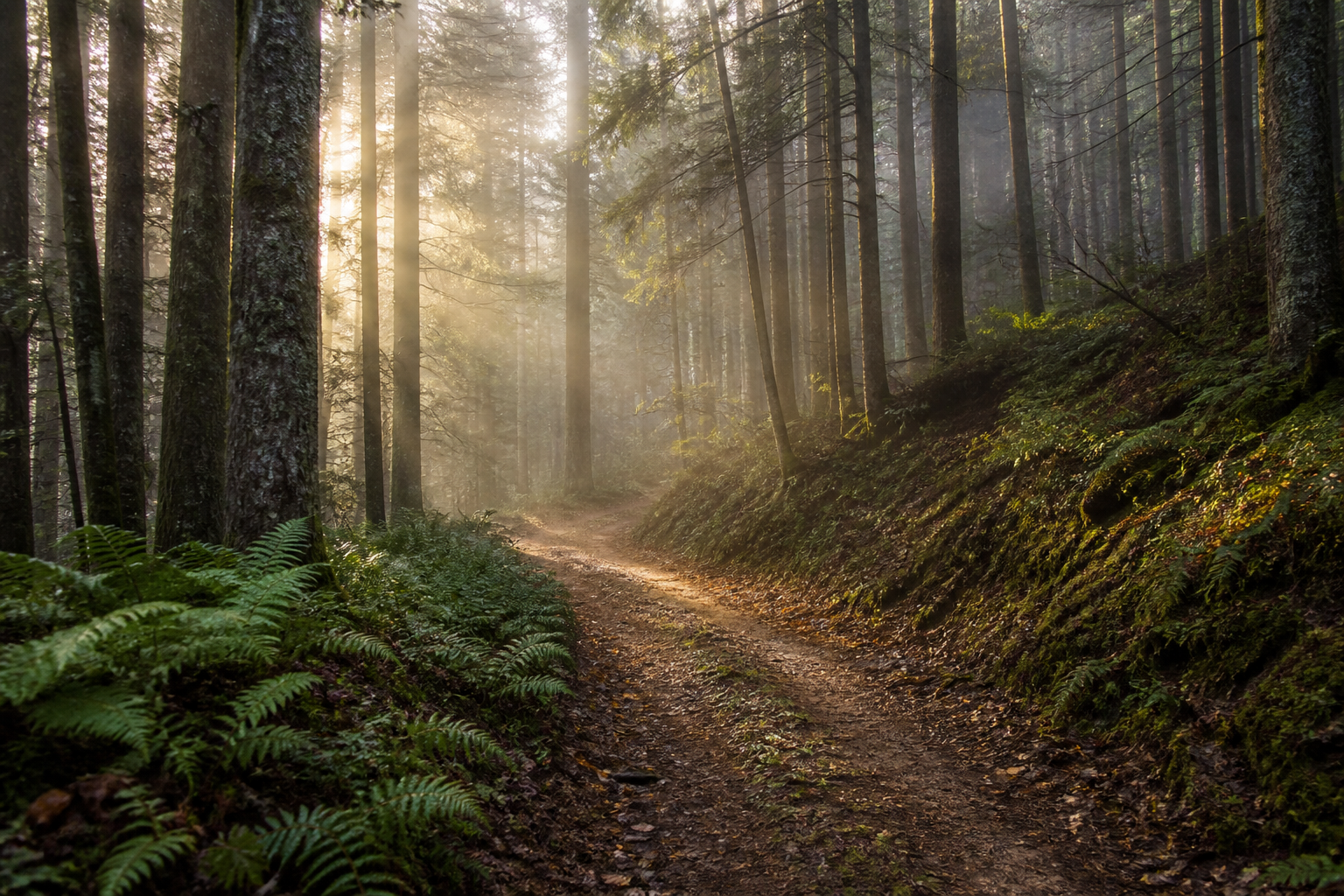
It is surprising how unevenly we remember our travels.
Some trips disappear into the background almost as soon as they end. We remember where we went, perhaps a few highlights, and little else.
Others stay with us for years.
Not every detail survives. In fact, much of it is forgotten. Yet something about those journeys remains remarkably alive. We find ourselves thinking about them again, often without knowing exactly why.
What memory keeps
It is curious how selective memory can be.
We often forget the monuments we thought we would never forget. We struggle to recall the names of museums we carefully planned to visit. The details that once seemed important quietly disappear.
Instead, what remains are moments that almost escaped our attention at the time.
A stranger helping us after we missed the last bus.
The silence before sunrise in a place we had never heard of a year earlier.
A meal shared around a table where conversation mattered more than the food.
The unexpected invitation that changed the course of an afternoon.
Rarely are these the moments we travelled to see. More often, they are the moments we never could have planned.
Feeling lasts longer than facts
Perhaps this is because memory is less interested in information than it is in emotion.
We remember what surprised us. What moved us. What challenged the way we saw ourselves or the world around us. Facts have their place, but feelings tend to stay longer.
The places that live on inside us are often those where something shifted–not necessarily dramatically, but quietly enough that we only recognised it much later.
Sometimes the shift comes through beauty.
Standing on a mountain ridge, watching clouds move through a valley below, we suddenly experience a kind of perspective that photographs cannot capture. For a few minutes, our usual concerns become smaller than the landscape before us.
Sometimes it comes through discomfort.
We become lost in a city whose language we do not speak. The plan falls apart. We are forced to ask for help. We discover, perhaps reluctantly, that the world is often kinder than our fears suggested.
Sometimes it arrives through another person.
Many travellers can describe a place they barely remember geographically, yet can speak in remarkable detail about the guide who welcomed them, the family who invited them into their home, or the fellow traveller who became a friend somewhere between two destinations.
Looking back, it becomes difficult to separate the place from the people who gave it life.
The same place, different journeys
This may explain why two people can visit exactly the same destination and return with entirely different stories.
The mountains were the same. The streets were the same. The weather may even have been the same. But one journey became a checklist of sights, while another became a collection of conversations, small acts of generosity, unexpected encounters and moments of genuine presence.
The difference was not necessarily the destination.
It was the experience of being there.
Who we were when we arrived
There is another curious quality to journeys that stay with us.
They often remind us of who we were during that particular season of life.
Travel does not happen in isolation. We always arrive carrying something with us: excitement, uncertainty, grief, hope or curiosity. The journey becomes woven together with whatever we happened to be living through at the time. Years later, remembering the place also means remembering the version of ourselves who walked those streets, climbed those hills or sat quietly watching the sea.
Perhaps that is why returning somewhere rarely feels like returning at all.
The place may have changed. More often, we have.
The café is still there. The path through the forest follows the same gentle curve. The market still opens every morning. Yet we experience them differently because we are no longer the person who first arrived.
In that sense, every memorable journey leaves behind two landscapes. One exists in the world. The other exists within us. Both continue to change long after the trip itself has ended.
Not always the biggest journeys
This is one reason why the journeys that stay with us are not always the biggest ones.
A weekend spent walking through unfamiliar villages can remain vivid for decades. A conversation during an overnight train may outlast memories from a month-long adventure. Distance alone explains surprisingly little.
Nor does novelty.
With enough time, even extraordinary places can fade if nothing meaningful happened there. Meanwhile, an ordinary afternoon can become unforgettable because someone made us feel welcome, because we finally slowed down enough to notice where we were, or because something quietly shifted inside us without announcing itself.
Room for the unexpected
Perhaps memorable journeys share one common quality above all else.
They made room for something unexpected.
Not simply a change of itinerary, but a change of attention.
For a while, we stopped trying to collect experiences and simply allowed ourselves to experience them. We became curious instead of efficient, present instead of hurried, open instead of certain. And in that openness, something found us that no itinerary could have promised.
In the end, perhaps that is why some journeys stay with us.
Not because they were the most ambitious or the most beautiful, but because they quietly became part of our own story.
Long after the itinerary has been forgotten, something of the journey continues–not in the places themselves, but in the person who returned home.