
Presence
What Happens When We Stop Trying to See Everything
On the quiet freedom of missing things – and why depth can offer more than breadth.
5 August 2026·5 min read
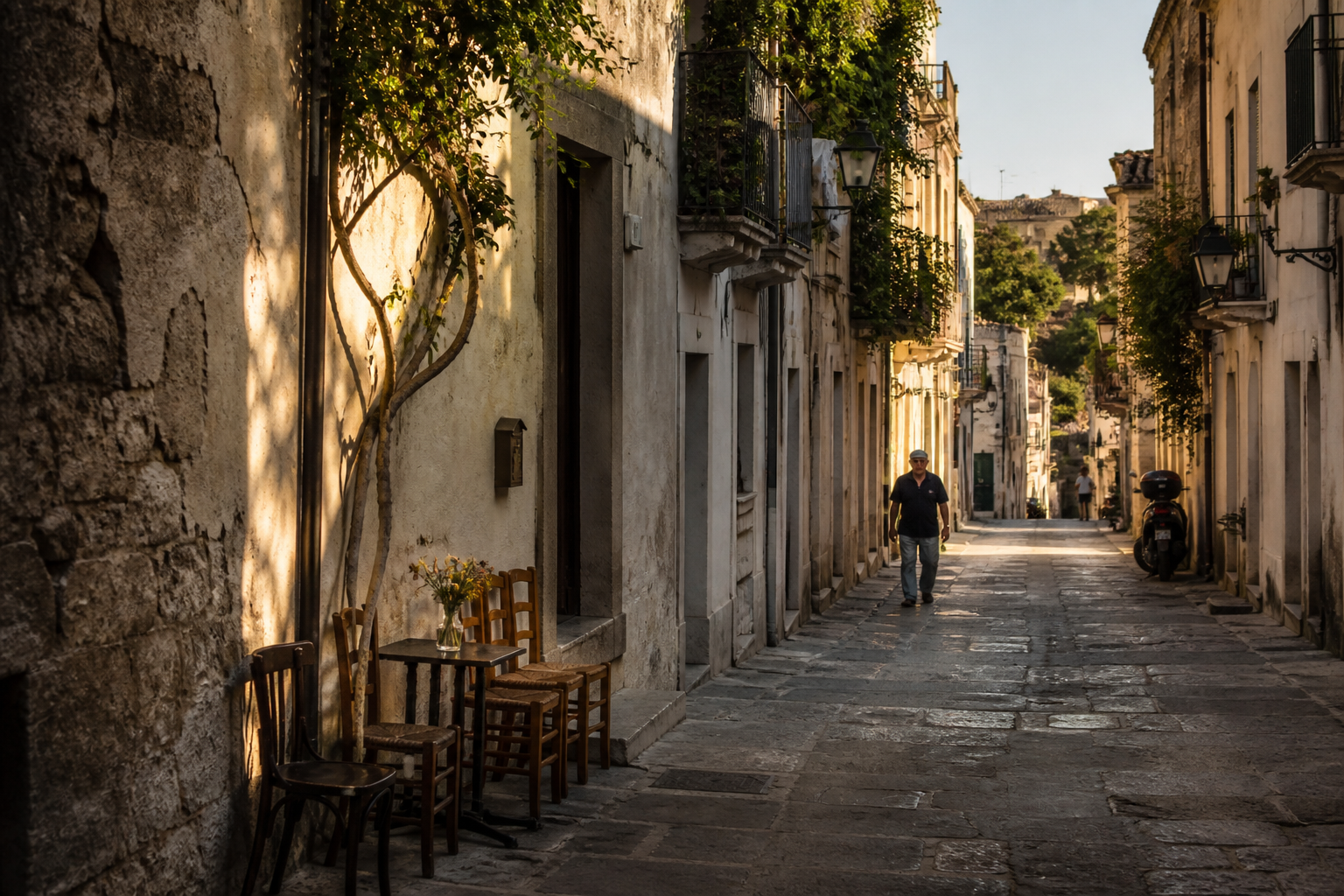
There is a familiar moment in almost every journey.
A map is open. Pins cover the screen. A list grows longer than the days available. There is the famous viewpoint, the hidden café, the market everyone recommends, the hike that “can’t be missed,” and the restaurant someone insisted was life-changing.
Almost without noticing, the trip becomes a puzzle to solve.
Can we fit one more stop into the afternoon? Is there time to drive another hour? What if we’re already so close? What if we never come back?
It is a curious contradiction. We leave home hoping to feel more present, yet many journeys begin with a race against time.
Perhaps this isn’t surprising. We live in a world that quietly rewards completeness. We like crossing things off lists. We feel a subtle satisfaction when every highlight has been seen and every recommendation fulfilled. Returning home with the feeling that we “did it all” can seem like a measure of a successful journey.
What the itinerary misses
Yet the memories that stay with us rarely follow the itinerary.
They tend to emerge in the spaces where the schedule loosened its grip.
An hour spent watching fishermen repair their nets while waiting for a ferry. A conversation that stretched far beyond the coffee we had ordered. Sitting beneath a tree simply because the afternoon was warm and nowhere else seemed more important.
None of these moments announce themselves while they are happening. They are almost invisible at the time. Only later do they begin to occupy a surprising amount of space in our memory.
Seeing is not the same as experiencing
Perhaps that is because seeing a place and experiencing it are not quite the same thing.
When we move quickly, our attention often stays on what comes next. We admire a cathedral while wondering if we’ll make the museum before it closes. We photograph the market while thinking about lunch reservations. Even beautiful places become chapters to finish rather than experiences to inhabit.
When the details become larger
Slowing down changes something difficult to describe but easy to recognise once it happens.
The details become larger.
We begin to notice the rhythm of a neighbourhood rather than only its landmarks. The café owner who greets everyone by name. The children walking home from school. The way evening gradually changes the sound of a square as conversations replace footsteps.
Nothing extraordinary has happened.
And yet somehow the place begins to feel less like a destination and more like somewhere people actually live.
Time rather than distance
This kind of seeing cannot be rushed.
It asks for time rather than distance.
Many experienced travellers eventually discover that adding another country is not always more rewarding than adding another day.
A single street walked five times often reveals more than five different streets walked once.
The first time we notice the architecture. The second time we recognise the baker arranging fresh bread. By the third morning, someone smiles in recognition. By the fourth, we stop looking around quite so urgently because we are no longer trying to consume the place. We are simply sharing it for a while.
Familiarity, even in small doses, has a quiet way of changing how we experience somewhere.
The freedom of missing things
There is another shift that often happens when we stop trying to see everything.
We become more comfortable missing things.
That can feel surprisingly difficult.
No matter how carefully we plan, there will always be another waterfall, another museum, another mountain pass, another village someone tells us we should have visited. Travel, like life, is an exercise in choosing what not to do.
For a long time, missing something can feel like failure.
Eventually, it begins to feel like freedom.
Because every decision not to rush somewhere creates space for something that could never have been planned.
An unexpected conversation.
A long lunch that becomes the highlight of the week.
A walk without knowing where it leads.
An invitation accepted simply because there is nowhere else we urgently need to be.
These moments rarely compete well against famous attractions on an itinerary.
But they compete remarkably well in memory.
Depth over breadth
Perhaps this is why some of the people who know a place best often move through it the slowest.
A local guide does not hurry because they already know what matters cannot be measured in the number of stops before sunset. They know the mountain will still be there tomorrow. They know the market has a different character early in the morning than late in the afternoon. They know that conversations cannot be scheduled with the same precision as train departures.
There is a quiet confidence in not needing to see everything.
It is not a lack of curiosity.
It is trusting that depth can sometimes offer more than breadth.
Beyond the journey
The same idea extends beyond travel.
We often carry the same instinct into everyday life. We try to read every article, answer every message, attend every event, seize every opportunity. We fear that slowing down means falling behind.
Yet our richest experiences rarely come from how much we managed to fit in.
They come from the moments to which we gave our full attention.
Travel simply makes this easier to notice because we are already outside our routines.
Perhaps that is one of its gentlest lessons.
A meaningful journey is not measured by how completely we covered a map.
It is measured by whether we were truly present for the small corner of it we happened to inhabit.
The world will always remain larger than any itinerary.
There will always be places we never visit, streets we never walk, conversations we never have.
Rather than making our journeys smaller, that reality makes each choice more meaningful.
When we stop trying to see everything, we often discover that we finally begin to see what is right in front of us.